How it works
One loop: offer, need, match, attest. Today she does the first three. You post what you need or bring, she points you to whoever fits, then she steps back.

Post what you need and what you offer. Utsa connects you to whoever fits, and remembers across time, so a need today can meet an offer from weeks ago.
First place in its track at the inaugural BGI Sprint, June 2026.
One loop: offer, need, match, attest. Today she does the first three. You post what you need or bring, she points you to whoever fits, then she steps back.
Built on OmegaClaw. A need posted today can match an offer made weeks earlier. She remembers across time.
Matches stay private to the people involved. She never spams the group, and never invents a match.
Utsa lives in the BGI Nexus Telegram group. She reads the channel quietly, so you don’t have to summon her for her to listen. When you want her:
She reads a simple grammar: #need, #offer, #team, #match, #pledge. Matches stay private to the people involved. The group only ever sees that a connection formed, never who or what.
Offer, Need, Match, Attest.
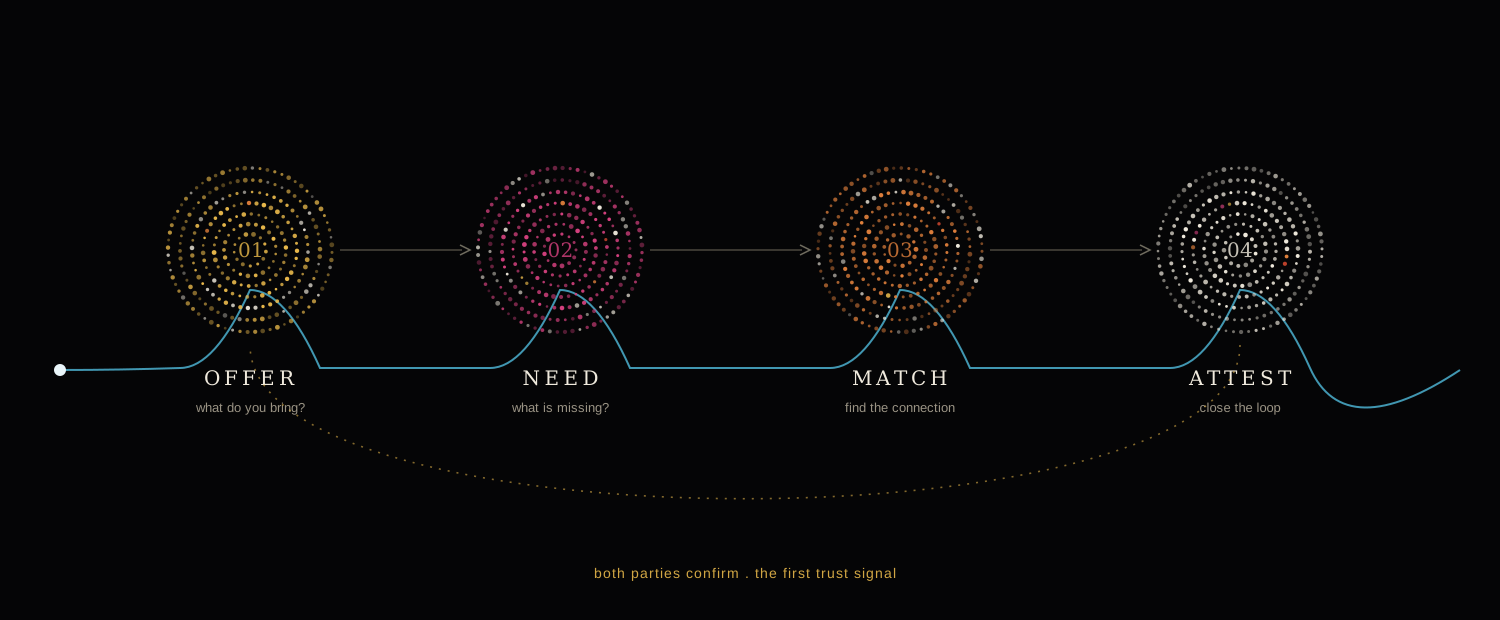
The first three steps are live. Attestation is designed and comes next, on her own instance. Reputation and multi-party coordination follow, once trust has data behind it.
Utsa builds on Ben Goertzel’s OfferNet vision, turning scattered intent into verified contributions. It began as a civic question I had been carrying for years: how do people find meaningful ways to contribute without relying on luck or proximity?
It became a live agent at the inaugural BGI Sprint, June 2026, and won first place in its track. The proof was recursive. Before any agent existed, the matching was run by hand in a community channel, and real teams formed, including the one that built Utsa.
In the live demo, a need posted in real time matched an offer made weeks earlier, live, in front of the judges. Two people, posting at different times, connected by an agent that remembered.
Utsa was also presented on the main stage at BGI Summit 2025 in Istanbul.
Today she matches. From here the OfferNet vision extends in clear steps:
The winning submission, built in the open. BGI Summit talk →
Built in the open. Open source (MIT). A coordination layer for the community, made with the community.